
Ask ten Hamiltonians how long it takes to get to Pearson and you will get ten answers, usually delivered with great confidence. Fifty minutes. An hour and a half. “Depends.” They are all right on some day of the year, and that is exactly the problem. The honest answer is that the drive is the least predictable part of your trip, and the best thing you can do is plan around that uncertainty instead of pretending it is not there.
This guide walks through how to work out when to leave, what changes the answer and how to build a cushion that keeps the morning calm. It is written for people travelling from Hamilton, Dundas, Ancaster, Stoney Creek and the surrounding area, but most of it applies anywhere in southern Ontario.
Start With the Flight, Not the Drive

Most people begin by asking how long the drive takes. It is a more useful exercise to start at the other end and work backwards from the moment your flight leaves.
Airlines publish check-in and bag-drop cut-offs, and they differ by carrier, route and destination. As a general rule of thumb, passengers on domestic flights are advised to be at the airport about two hours before departure, and passengers on international flights about three. Those are guidelines, not promises. Your airline’s own instructions always win, and some carriers are stricter around holidays or at busy terminals. Check your booking confirmation before you plan anything else.
Once you know when you need to be at the terminal, you can subtract the travel time and then add a cushion. That cushion is the part people skip, and it is the thing that decides whether your morning is calm or miserable.
- Find the time your airline wants you at the airport.
- Estimate the drive for the time of day you will actually be travelling.
- Add a buffer for the things you cannot predict.
- Add a little more if you are checking bags, travelling with children or flying on a holiday weekend.
How Long Is the Drive, Really?
From central Hamilton to Pearson is roughly 70 kilometres, depending on where you start. On a quiet Sunday morning with dry roads, that can take under an hour. On a weekday between about 6:30 and 9:30 a.m., or on a Friday afternoon, it can run to double that. Drivers coming from Stoney Creek or Grimsby add more distance, while those starting in Dundas or Ancaster have a slightly different approach but face much the same pressure points.
Those pressure points are worth knowing:
- The Burlington Skyway and the QEW. The Skyway is a narrow, high bridge and any slowdown there tends to ripple back. A single stalled vehicle can turn a free-flowing road into a crawl.
- Oakville and Mississauga. The stretch through Halton and Peel is the busiest part of the trip, with merging traffic from several highways.
- The airport approaches. Near Pearson, the roads around the terminals fill with taxis, shuttles and private vehicles, and getting from the highway to the departures door can take longer than you would think.
- Construction. Lane closures are common and often announced only a few days ahead.
Because traffic here changes by the hour, a number you heard from a friend last spring is a poor guide. What matters is what the roads look like on the morning you travel.
Weather Changes Everything
Southern Ontario weather does not need to be dramatic to slow things down. Light snow can reduce speeds across the QEW, freezing rain can close lanes and heavy fog or rain can make the Skyway an unpleasant place to be. In winter, the cushion you plan should be larger than in summer, and you should check the forecast the night before as well as the morning of.
If a big storm is coming, consider moving your pickup earlier, or talk to your airline about options. It is better to wait at the airport with a coffee than to watch your flight leave without you.
We have written separately about winter airport transfers in Ontario, if you would like the longer version.
A Simple Way to Plan the Morning
Here is a straightforward method that works for most trips.
Step one: set your target arrival
Take your departure time and subtract two hours for a domestic flight or three for an international one. If your airline recommends more, use that instead. This is the time you want to be standing at the terminal.
Step two: estimate the drive for that hour
Do not use the best-case number. Use the number that applies to the time of day you will actually be travelling. If you are leaving at 5 a.m., the roads are typically lighter. If you are leaving at 7:30 a.m. on a weekday, assume it will be slower.
Step three: add a buffer
A buffer of 30 to 45 minutes is a sensible starting point. If you are anxious about missing flights, make it an hour. If you are flying on a holiday weekend, add more.
Step four: add time for the little things
Checking bags, dropping off a rental car, going through a long security line, helping a relative who needs extra time. All of these take longer than expected.
When you add everything up, the result might look earlier than you wanted. It is usually right.
What Changes With Kids, Luggage or an Early Flight
Not every trip is the same, and the plan should reflect that.
- Travelling with children. Children slow everything down, especially when they are tired. Allow extra time for bathroom stops, snacks and the general chaos of getting a family through an airport.
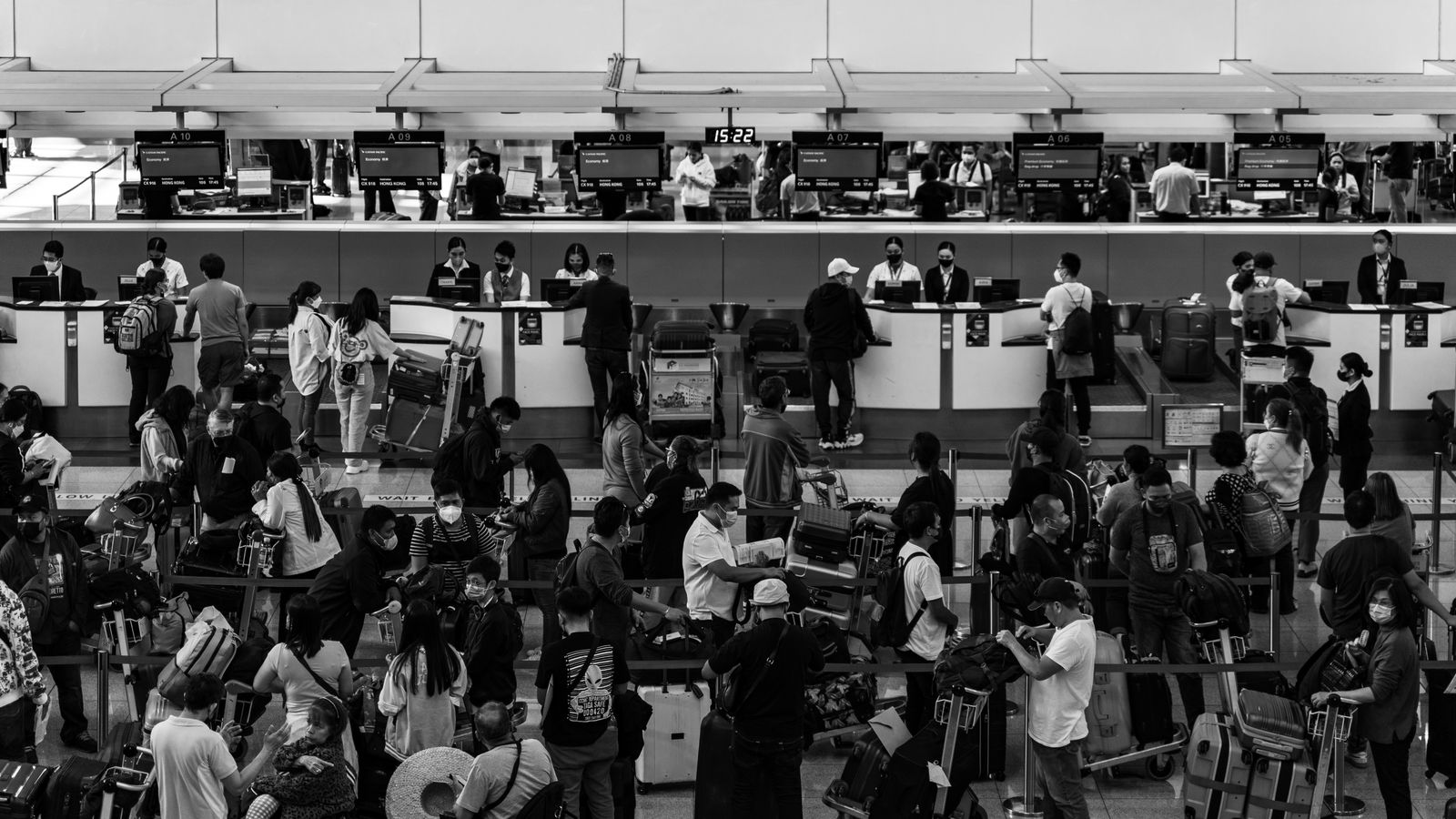
- Checked luggage. Bag drop lines can be long, particularly for international flights and at peak times. If you have a lot of luggage, arrive early.
- Early-morning flights. Roads are quieter at 4 a.m., but you are tired, the weather can still be bad and it is easy to oversleep. Set two alarms.
- Holiday weekends. The Thursday before a long weekend and the Friday afternoon are notorious. Leave earlier than you normally would.
- Mobility needs. If you or someone with you needs assistance, contact your airline ahead of time and allow more time at the terminal.
Parking, Shuttles and the Hidden Time Costs
If you plan to drive yourself, remember that arriving at the airport is not the same as arriving at the terminal. You still have to park, take a shuttle (if the lot is off-site) and walk to check-in. That can add 30 to 45 minutes, depending on the lot and the time of day.
We compare the real costs and the time in more detail in our guide to airport limos versus parking at Pearson. The short version is that the sticker price of parking is not the whole story, and for longer trips or early flights, being dropped at the door often works out better than people expect.
What a Chauffeur Changes About the Plan

The main thing a pre-booked chauffeur changes is that someone else handles the uncertainty. When you book a Hamilton to Pearson airport limo, you give us your flight details, and we do the work of setting the pickup time.
- We work backwards from your flight, using the same method described above.
- We check live conditions before leaving, and choose the route that looks best on the day.
- We track your flight, so if it is delayed or moved, the pickup adjusts.
- We drop you at the correct terminal and help with your luggage.
- On the way home, we track your arrival and meet you when you actually land.
It does not make traffic disappear, but it removes the decisions. You do not have to watch the clock in the car, wonder which highway is best or worry about where to park.
When Leaving Earlier Is the Right Call
There are situations where it makes sense to leave even earlier than the standard plan.
- You have a connection that is tight on the other end.
- You are travelling with someone who needs extra time.
- A storm is forecast.
- You are flying out on a major holiday.
- You simply hate rushing.
An extra half hour in the terminal costs you a coffee. A missed flight costs far more. If you are in doubt, leave earlier.
Coming Home: Planning the Return
The same principle works in reverse. Flights arrive early, late or on time, and baggage claim can be fast or slow. If you have arranged a ride, make sure the driver has your flight number so they can follow it. If you are driving yourself, remember that the drive home after a long flight is when you are least alert.
For return pickups, we suggest messaging your driver as soon as you land, so they can time the approach to the terminal.
Common Mistakes to Avoid
- Trusting the best-case estimate. The fastest drive you have ever done is not your plan.
- Forgetting the terminal. Pearson has more than one terminal in regular use. Confirm which one your airline uses before you leave.
- Skipping the cushion. If you leave exactly as early as the calculation says, any delay becomes a problem.
- Leaving documents in the trunk. Keep passports, boarding passes and medications in a bag you carry.
- Not telling anyone the plan. If you are travelling with family or colleagues, make sure everyone knows the pickup time and place.
Frequently Asked Questions
How early should I leave Hamilton for a 7 a.m. flight?
For a domestic flight, you would want to be at the airport by around 5 a.m., and the drive is typically around an hour in quiet conditions. That points to leaving between 3:45 and 4:00 a.m., and earlier if the weather is poor. For an international flight at the same time, plan to arrive about an hour earlier still.
Is the drive shorter from Burlington or Oakville?
Yes. Burlington and Oakville are closer to Pearson, so the base driving time is shorter. The pressure points are the same, though, so the same buffer logic applies. See our pages for Burlington to Pearson and Oakville to Pearson for details.
What if my flight is delayed?
Tell your driver. If you have booked a pickup, we track flights and adjust. For departures, check the airline’s app for updates, and keep your original arrival time unless the airline tells you otherwise.
What if I am travelling from Dundas, Stoney Creek or Grimsby?
The distance is a bit longer, and the buffer should be a bit larger. We cover these areas with dedicated pages for Dundas to Pearson, Stoney Creek to Pearson and Grimsby to Pearson.
The Bottom Line
Work backwards from your flight, use realistic travel times and add a buffer you can live with. If you would rather hand the planning to someone else, we are happy to do it. Request a quote with your flight time and address, and we will suggest a pickup that gives you room to breathe.
A Few More Practical Tips for Airport Mornings
Once you have settled on a departure time, a handful of habits make the morning smoother. None of them are complicated, but together they remove most of the small things that go wrong.
- Pack the night before. Put your passport, boarding pass, wallet and phone charger in the same place, and set your bags by the door. Looking for a missing passport at 4:30 a.m. is a miserable way to start a trip.
- Check in online. Most airlines let you check in 24 hours ahead. Doing it early saves time at the airport and lets you choose a seat, which matters if you are travelling with family.
- Check the terminal again. Airlines occasionally change gates and terminals, so look at your booking the evening before and again before you leave.
- Fuel up before you go. If you are driving yourself, fill the tank the night before. Stopping for gas on the way, in the dark, with a flight to catch, is a recipe for stress.
- Keep your phone charged. You will use it for boarding passes, messages to your driver and updates from the airline.
- Share your plan. Tell a family member or colleague your flight number and departure time. If something goes wrong, someone knows where you are meant to be.
Think about the person who is not travelling
If you are dropping off a relative, think about their needs as well. Older travellers may prefer to arrive early and wait, while younger ones might want to be dropped as late as possible. Agree on a plan so nobody is left worrying.
Leave room for the unexpected
The best airport mornings are boring. Nothing goes wrong, the traffic is light and you have time for a coffee at the gate. You get there by planning for the worst and being pleasantly surprised. If you take only one idea from this guide, make it that one: plan for the day when everything goes slightly wrong, because eventually that day will be your travel day.